


8:00 AM - 7:00 PM EST

Open Monday - Friday

(800) 979-3707

Call Us For Free Consultation

Facebook

Twitter

Search
 

Articles

Read our expertly written blog

Does New York Law Require Manual Workers to Be Paid Every Week?

Introduction: Does New York Law Require Manual Workers to Be Paid Weekly? Getting paid on time is essential for managing everyday expenses. Rent, transportation, groceries, utilities, and other bills often depend on receiving wages when expected. But what happens when you work in a job that involves physical labor and your employer pays you every two weeks instead of every week? In New York, the frequency of wage payments depends partly on the type of work an employee performs. Under New York Labor Law § 191, covered manual workers generally must be paid weekly, with wages paid no later than...

Continue reading

Sent Home Early After Reporting to Work? Your New York Right to Call In Pay.

Introduction: What Happens When Your Employer Sends You Home Early? Imagine arriving at work for a scheduled shift, only to be told that business is slow and you are no longer needed. You may have spent time commuting, arranged childcare, or turned down other opportunities to make it to work. Yet, instead of working your expected shift, you leave after only an hour or two. For New York employees, this situation raises an important question: Can an employer send you home early without paying you for the rest of your scheduled shift? The answer depends on the applicable wage rules...

Continue reading

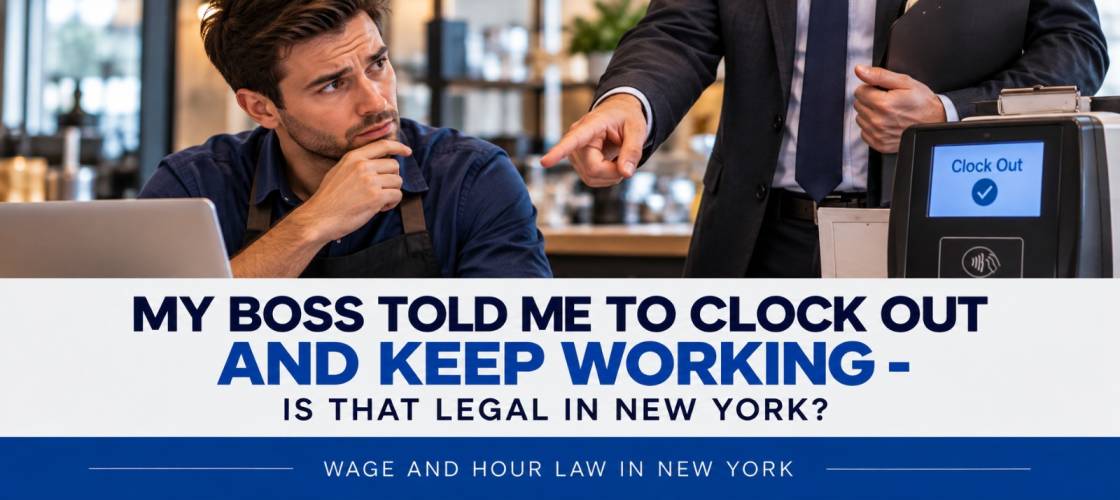
My Boss Told Me to Clock Out and Keep Working – Is That Legal in New York?

Your Shift Ended. Your Work Didn’t. Your manager tells you: “Clock out first, then finish cleaning.” Or: “You’re already at 40 hours. Clock out and finish what you need to do.” Maybe you’re asked to close the store, finish paperwork, answer a few more customer questions, clean equipment, complete a report, or prepare things for the next shift. You’re technically clocked out but you’re still working. For many employees, it may seem like just another workplace rule they have to follow. But if you are a covered, non-exempt employee, work your employer requires or allows you to perform generally counts...

Continue reading

Does Your Employer Round Your Clock-In and Clock-Out Times? What New York Workers Should Know

Introduction: A Few Minutes Every Day Can Add Up You arrive at work at 8:53 a.m. and clock in. But when you check your time record, your starting time appears as 9:00 a.m. Later that day, you finish working at 5:08 p.m., but your timecard shows 5:00 p.m. It is only a few minutes, so you may not think much about it. But what if it happens every day? Those small differences can add up to hours of potentially unpaid time over weeks and months. Some employers use timekeeping systems that “round” employees’ clock in and clock out times rather...

Continue reading

Can an Employer Change Your Timecard in New York

You clocked in on time, worked through part of your lunch break, stayed late to finish your tasks, and expected your paycheck to reflect the hours you worked. But when payday arrives, the numbers don’t add up. Maybe your clock-in time was moved forward. Your clock-out time was changed. A meal break you never took was automatically deducted. Or some of the extra time you worked simply disappeared from your timecard. This raises an important question for New York workers: Can an employer legally change your timecard? The answer depends on why the record was changed. Employers may correct legitimate...

Continue reading

Your Paycheck Is Short: What Should You Do If Your Employer Underpaid You in New York

Introduction: When Your Paycheck Doesn’t Match What You Earned You worked your scheduled hours. Maybe you stayed late, covered an extra shift, worked overtime, earned tips or commissions, or completed work outside your normal schedule. Then payday arrives and your paycheck is less than you expected. Sometimes a short paycheck is the result of a simple payroll mistake. But in other situations, missing wages may point to a larger problem involving unpaid work, incorrect pay rates, missing overtime, improper deductions, or compensation that was not properly included. For New York workers, the important question is not simply “Why is my...

Continue reading

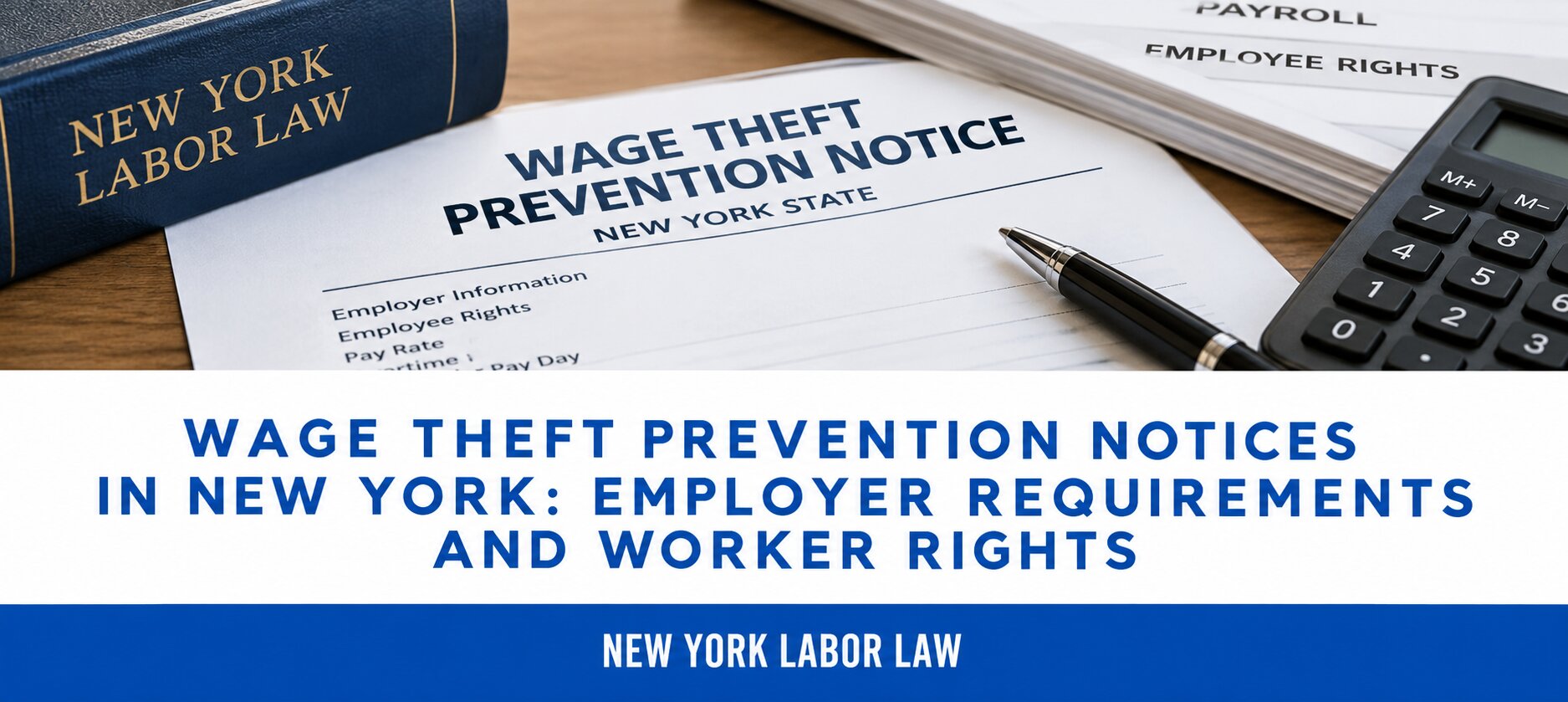
Wage Theft Prevention Notices in New York: Employer Requirements and Worker Rights

Introduction: Your Pay Notice Is More Important Than You Think When you start a new job, there are usually many documents to review and sign. You may receive an employee handbook, tax forms, benefits information, and other onboarding paperwork. One document that deserves special attention is your wage notice. In New York, employers covered by the Wage Theft Prevention Act, commonly called the WTPA, are required to provide new employees with written information about their wages. The notice is designed to make the basic terms of an employee's pay clear from the beginning. It tells a worker how much they...

Continue reading

Statutory Damages for Improper Paystubs Under New York Labor Law: What Workers Need to Know

New York paystub violations statutory damages for improper paystubs New York Labor Law paystub New York wage statement violations improper paystub damages New York $250 paystub violation New York New York wage theft Learn about New York paystub violations, wage statement requirements, and potential statutory damages for improper paystubs under New York Labor Law.

Introduction: Your Paystub Could Be Worth More Than You Think When you receive your paycheck, you may look at the final amount, make sure the money reached your bank account, and move on with your day. But there is another part of your paycheck that deserves just as much attention: your paystub. A paystub is not simply a receipt. It can provide important information about how your employer calculated your wages, how many hours were recorded, what rate you were paid, what deductions were taken, and how your gross wages became your final take-home pay. For New York workers, these...

Continue reading

Your Pay Stub Could Reveal a Wage Violation: What New York Workers Need to Know About Their Rights

New York employee pay stub rights New York pay stub requirements New York Labor Law 195 New York wage statement requirements employee rights to pay stubs in New York incorrect pay stub New York New York overtime pay stub Learn about New York employee pay stub rights, wage statement requirements, overtime information, payroll records, and what to do when your pay stub is incorrect.

Introduction: Your Pay Stub Is More Than a Record of Your Paycheck For many employees, a pay stub is something they glance at and then put away. You may look at the amount deposited into your bank account, make sure it seems close to what you expected, and move on with your day. But your pay stub can tell you much more than how much money you took home. A wage statement can help you understand how your employer calculated your earnings, how many hours were counted, what rate of pay was used, what deductions were taken, and whether overtime...

Continue reading

From Tip Theft to Unpaid Overtime: 10 Wage Violations New York Restaurant Workers Should Know

Learn about 10 common wage violations affecting New York restaurant workers, including tip theft, unpaid overtime, off-the-clock work, and illegal deductions. New York restaurant wage violations New York restaurant workers' rights New York unpaid overtime restaurant wage theft New York New York tip theft New York minimum wage violations New York labor law violations

Introduction: When Restaurant Work Does Not Add Up on Your Paycheck Working in a restaurant can be demanding. Servers, bartenders, cooks, dishwashers, hosts, bussers, and other hospitality workers often work long hours in fast-paced environments. A typical shift may involve rushing between tables, handling customer requests, preparing food, cleaning, closing the restaurant, and dealing with unexpected problems. For many workers, tips are also an important part of their income. Because restaurant work often involves hourly wages, tips, overtime, split shifts, service charges, and other forms of compensation, it can sometimes be difficult for employees to know whether they are being...

Continue reading