


8:00 AM - 7:00 PM EST

Open Monday - Friday

(800) 979-3707

Call Us For Free Consultation

Facebook

Twitter

Search
 

Articles

Read our expertly written blog

Can an Employer Change Your Timecard in New York

You clocked in on time, worked through part of your lunch break, stayed late to finish your tasks, and expected your paycheck to reflect the hours you worked. But when payday arrives, the numbers don’t add up. Maybe your clock-in time was moved forward. Your clock-out time was changed. A meal break you never took was automatically deducted. Or some of the extra time you worked simply disappeared from your timecard. This raises an important question for New York workers: Can an employer legally change your timecard? The answer depends on why the record was changed. Employers may correct legitimate...

Continue reading

Your Paycheck Is Short: What Should You Do If Your Employer Underpaid You in New York

Introduction: When Your Paycheck Doesn’t Match What You Earned You worked your scheduled hours. Maybe you stayed late, covered an extra shift, worked overtime, earned tips or commissions, or completed work outside your normal schedule. Then payday arrives and your paycheck is less than you expected. Sometimes a short paycheck is the result of a simple payroll mistake. But in other situations, missing wages may point to a larger problem involving unpaid work, incorrect pay rates, missing overtime, improper deductions, or compensation that was not properly included. For New York workers, the important question is not simply “Why is my...

Continue reading

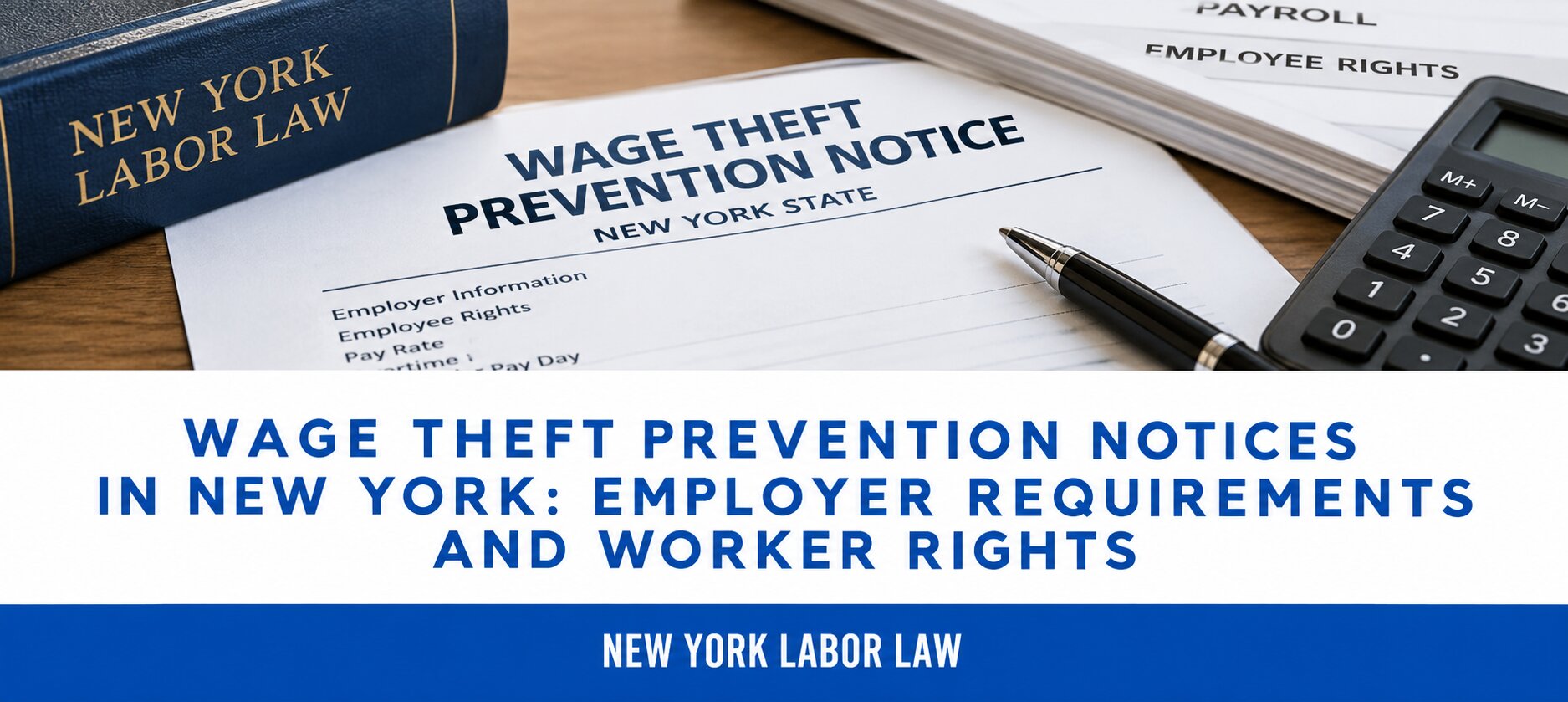
Wage Theft Prevention Notices in New York: Employer Requirements and Worker Rights

Introduction: Your Pay Notice Is More Important Than You Think When you start a new job, there are usually many documents to review and sign. You may receive an employee handbook, tax forms, benefits information, and other onboarding paperwork. One document that deserves special attention is your wage notice. In New York, employers covered by the Wage Theft Prevention Act, commonly called the WTPA, are required to provide new employees with written information about their wages. The notice is designed to make the basic terms of an employee's pay clear from the beginning. It tells a worker how much they...

Continue reading

Statutory Damages for Improper Paystubs Under New York Labor Law: What Workers Need to Know

New York paystub violations statutory damages for improper paystubs New York Labor Law paystub New York wage statement violations improper paystub damages New York $250 paystub violation New York New York wage theft Learn about New York paystub violations, wage statement requirements, and potential statutory damages for improper paystubs under New York Labor Law.

Introduction: Your Paystub Could Be Worth More Than You Think When you receive your paycheck, you may look at the final amount, make sure the money reached your bank account, and move on with your day. But there is another part of your paycheck that deserves just as much attention: your paystub. A paystub is not simply a receipt. It can provide important information about how your employer calculated your wages, how many hours were recorded, what rate you were paid, what deductions were taken, and how your gross wages became your final take-home pay. For New York workers, these...

Continue reading

Your Pay Stub Could Reveal a Wage Violation: What New York Workers Need to Know About Their Rights

New York employee pay stub rights New York pay stub requirements New York Labor Law 195 New York wage statement requirements employee rights to pay stubs in New York incorrect pay stub New York New York overtime pay stub Learn about New York employee pay stub rights, wage statement requirements, overtime information, payroll records, and what to do when your pay stub is incorrect.

Introduction: Your Pay Stub Is More Than a Record of Your Paycheck For many employees, a pay stub is something they glance at and then put away. You may look at the amount deposited into your bank account, make sure it seems close to what you expected, and move on with your day. But your pay stub can tell you much more than how much money you took home. A wage statement can help you understand how your employer calculated your earnings, how many hours were counted, what rate of pay was used, what deductions were taken, and whether overtime...

Continue reading

From Tip Theft to Unpaid Overtime: 10 Wage Violations New York Restaurant Workers Should Know

Learn about 10 common wage violations affecting New York restaurant workers, including tip theft, unpaid overtime, off-the-clock work, and illegal deductions. New York restaurant wage violations New York restaurant workers' rights New York unpaid overtime restaurant wage theft New York New York tip theft New York minimum wage violations New York labor law violations

Introduction: When Restaurant Work Does Not Add Up on Your Paycheck Working in a restaurant can be demanding. Servers, bartenders, cooks, dishwashers, hosts, bussers, and other hospitality workers often work long hours in fast-paced environments. A typical shift may involve rushing between tables, handling customer requests, preparing food, cleaning, closing the restaurant, and dealing with unexpected problems. For many workers, tips are also an important part of their income. Because restaurant work often involves hourly wages, tips, overtime, split shifts, service charges, and other forms of compensation, it can sometimes be difficult for employees to know whether they are being...

Continue reading

The Complete Guide to New York Hospitality Wage Laws: Minimum Wage, Tipped Workers, Overtime & More

Learn about New York hospitality wage laws, including minimum wage, tipped workers, tip credits, overtime, wage theft, payroll deductions, and employee rights. New York hospitality wage laws New York Hospitality Wage Order New York tipped employee laws New York tip credit New York hospitality overtime New York restaurant wage laws New York wage theft laws

Introduction: Why New York Hospitality Wage Laws Matter New York's hospitality industry is a major part of the state's economy. Restaurants, hotels, bars, catering companies, resorts, and other hospitality businesses employ thousands of workers in jobs that keep customers fed, comfortable, and cared for. From servers and bartenders to hotel housekeepers, kitchen staff, front desk employees, and other workers, hospitality employees perform many different types of work every day. However, hospitality workers can also face complicated wage issues. Their pay may include a combination of hourly wages, tips, overtime, service charges, and other forms of compensation. Employees may work long...

Continue reading

New York Tip Pooling Laws Explained: Who Can Legally Share Tips and What Hospitality Workers Need to Know

New York Tip Pooling Laws New York Tip Credit Rules Tip Pooling Laws for Restaurants New York Hospitality Employment Law Employee Tip Rights New York Restaurant Wage Laws New York New York Employment Lawyer Learn how New York tip pooling laws work, who can legally share tips, what a tip credit means, employee rights, employer responsibilities, and what to do if your tips are taken unfairly. Read this comprehensive guide from Sanders Law Group.

Introduction For thousands of hospitality workers across New York, tips are much more than a bonus. They are an important part of their income and help cover everyday expenses such as rent, groceries, transportation, and bills. Whether you work as a server in a busy restaurant, a bartender in a local pub, or a food runner in a luxury hotel, every dollar earned through tips matters. Many hospitality businesses use a tip pooling system to distribute tips among employees who contribute to the customer experience. While tip pooling is common, it is also one of the most misunderstood areas of...

Continue reading

New York Tip Pooling Laws Explained: Who Can Legally Share Tips and What Restaurant Employers and Employees Need to Know

New York tip pooling laws tip pooling vs tip sharing can managers share tips in New York New York restaurant tip laws who can participate in a tip pool manager tip pooling rules New York tip credit rules Learn New York tip pooling laws, who can legally share tips, whether managers can participate, and restaurant employer responsibilities. Read this simple guide from Sanders Law Group.

Introduction For thousands of restaurant workers across New York, tips are more than just extra income. They make up a significant part of their earnings and often help cover everyday expenses such as rent, groceries, transportation, and bills. Servers, bartenders, bussers, food runners, barbacks, and other hospitality employees depend on tips earned through excellent customer service. Because tips are such an important source of income, disagreements about who should receive them can quickly become serious. Questions often arise about whether managers can participate in a tip pool, whether restaurant owners can collect employee tips, and whether employers can require workers...

Continue reading

How Overtime Is Calculated for Construction and Trade Workers Paid Daily Rates in New York

Learn how overtime is calculated for construction and trade workers paid daily rates in New York. Understand overtime laws, worker rights, common wage violations, and what to do if you are denied overtime pay with guidance from Sanders Law Group. Construction worker overtime New York Daily rate overtime calculation New York overtime laws Construction overtime pay Trade worker overtime rules Unpaid overtime for construction workers Overtime rights New York construction workers

Introduction Construction and trade workers help build homes, offices, roads, schools, hospitals, and many other structures that people rely on every day. These workers often put in long hours, work in difficult weather conditions, and perform physically demanding tasks. Because of the nature of the industry, many construction employees regularly work more than 40 hours per week. While some workers are paid by the hour, others receive a daily rate. Being paid a daily rate can make paycheck calculations seem simple, but it can also create confusion when it comes to overtime pay. Many workers mistakenly believe that receiving a...

Continue reading