



Wage Theft in Health Care: Protecting Caregivers From Unpaid Work & Overtime Violations
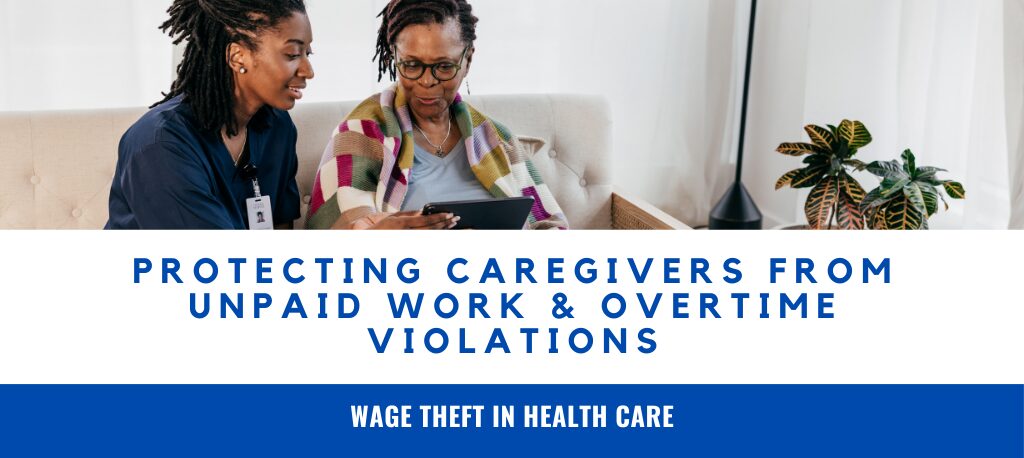
Health care workers across the United States play a critical role in keeping individuals, families, and communities safe and healthy. Nurses, home health aides, caregivers, medical assistants, and support staff work long hours, often under stressful and demanding conditions. Yet many of these workers are not paid properly for the time they put in.
When an employer fails to pay a health care worker for all hours worked, overtime, or minimum wage, it is called wage theft. Wage theft is illegal under U.S. federal and state law. Unfortunately, it is far too common in hospitals, nursing homes, assisted living facilities, and home care settings throughout the country.
At Sanders Law Group, we help health care and home care workers across the United States understand their rights, recover unpaid wages, and take action against employers who violate wage and hour laws.
When Caregivers Aren’t Cared For
Caregivers are expected to show compassion, patience, and commitment every day. Many health care workers stay late, arrive early, and take on extra responsibilities because patient care matters to them. However, dedication to the job should never come at the cost of unpaid labor.
When employers fail to pay caregivers properly, it sends a clear message that their time and effort are being taken for granted. Wage theft does more than hurt workers financially, it affects morale, mental health, and job stability.
In the United States, fair pay is not optional. It is a legal requirement.
Wage Theft in Health Care and Home Care Jobs
Wage theft affects health care workers in nearly every setting, including:
- Hospitals and medical centers
- Nursing homes and rehabilitation facilities
- Assisted living facilities
- Home health care agencies
- Private home care arrangements
Workers most commonly impacted include nurses, certified nursing assistants (CNAs), home health aides, hospice workers, medical assistants, and personal caregivers.
Home care workers are particularly vulnerable because they often work alone in private homes. Without coworkers or supervisors present, employers may assume violations will go unnoticed.
Why Wage Theft Is So Common in the Health Care Industry
Wage theft is widespread in the U.S. health care industry for several reasons:
Long shifts and overtime hours
Health care workers frequently work more than 40 hours per week, which triggers overtime pay requirements under federal law.
Staff shortages
Understaffing forces workers to stay late or take on extra shifts without proper compensation.
Pressure-driven work environments
Caregivers are often told that patient needs come first, even if that means working through breaks or clocking out early.
Fear of job loss or retaliation
Many workers worry that reporting wage violations could cost them their job or future work opportunities.
Misunderstanding of labor laws
Some employers misapply exemptions or misclassify workers to avoid paying overtime.
What Is Wage Theft in Health Care?
Wage theft occurs when a U.S. employer does not pay a worker the wages required by law. This includes:
- Not paying for all hours worked
- Failing to pay overtime
- Paying less than the federal or state minimum wage
- Making illegal deductions
Even small unpaid amounts add up over time, costing workers thousands of dollars in earned income.
Common Types of Wage Theft Faced by Health Care Workers
Health care workers in the U.S. commonly experience:
Unpaid overtime
Not receiving time-and-a-half pay for hours worked over 40 in a workweek.
Off-the-clock work
Being required to perform tasks before clocking in or after clocking out.
Automatic meal break deductions
Employers deducting meal breaks even when workers are unable to take them.
Employee misclassification
Labeling workers as exempt or independent contractors when they should be non-exempt employees.
Minimum wage violations
Paying workers less than the federal or state minimum wage.
Time rounding abuses
Rounding time in a way that consistently benefits the employer.
Why Caregivers and Home Care Workers Are Especially Vulnerable
Caregivers often feel a strong sense of responsibility toward patients, which employers may exploit. Many home care workers also face:
- Limited employment options
- Language barriers
- Immigration concerns
- Isolation from coworkers
- Lack of union representation
These factors can make it difficult to challenge illegal pay practices.
Wage Theft Risks for Home Care and Domestic Workers
Home care workers in the United States are often misclassified under the “companionship services” exemption. This exemption is a very narrow one, and only applies to workers who are directly employed by the individual being cared for or their family, and who primarily provide companionship and perform minor household work. The exemption does not apply to professional caregivers such as nurses or certified nurse assistants, to caregivers who are employed by third-parties such as home health care agencies, and to workers who perform significant household work. These workers – particularly those who perform skilled personal care and medical support tasks – are entitled to overtime pay and minimum wages, .
How Losing Wage Protections Impacts Care Workers and Their Families
When caregivers are underpaid, the effects go far beyond the paycheck:
- Difficulty paying rent, utilities, or groceries
- Increased reliance on debt
- Emotional stress and burnout
- Reduced job stability
- Negative impact on family life
Wage theft also contributes to high turnover and worker fatigue, which can affect the quality of care provided to patients.
Federal and State Wage Laws That Protect Health Care Workers
Health care workers in the U.S. are protected by both federal and state wage laws. These laws require employers to:
- Pay at least the applicable minimum wage
- Pay overtime for eligible employees
- Keep accurate time and pay records
- Avoid retaliating against workers who assert their rights
Some states provide stronger protections than federal law, including higher minimum wages and longer recovery periods.
Your Rights Under the Fair Labor Standards Act (FLSA)
The Fair Labor Standards Act (FLSA) is the primary federal law governing wages and hours in the United States.
Under the FLSA, eligible health care workers have the right to:
- Earn at least the federal minimum wage
- Receive overtime pay at 1.5 times their regular rate
- Be paid for all hours worked
- File wage complaints without fear of retaliation
Employers cannot force workers to waive these rights.
Signs You May Be a Victim of Wage Theft
You may be experiencing wage theft if:
- Your paycheck does not reflect all hours worked
- Overtime hours are unpaid or denied
- Meal breaks are deducted automatically
- You are told overtime is not allowed but still required to work
- Your job duties do not match your classification
If you suspect wage theft, it is important to take action.
What to Do If You Suspect Wage Theft at Work
If you believe your employer is violating U.S. wage laws:
- Track your hours worked
- Save pay stubs and schedules
- Document instructions from supervisors
- Avoid confronting your employer alone
- Contact a wage theft attorney
Early legal guidance can protect your rights.
Can You Take Legal Action Against Your Employer?
Yes. U.S. law allows workers to take legal action to recover unpaid wages and overtime.
You do not have to quit your job to file a claim. Many cases can be handled discreetly, and legal protections exist to prevent retaliation.
How a Wage Theft Lawyer Can Help Health Care Workers
A wage theft attorney can:
- Review pay records
- Identify wage violations
- Calculate unpaid wages
- File claims under federal or state law
- Represent you in negotiations or court
Legal support helps ensure employers are held accountable.
What Compensation You May Be Entitled To Recover
Depending on your case, you may recover:
- Back pay for unpaid wages
- Unpaid overtime
- Minimum wage differences
- Additional damages allowed by law
- Attorney’s fees and costs
Protection Against Employer Retaliation
U.S. labor laws strictly prohibit retaliation. Employers may not legally fire, demote, reduce hours, or harass workers for asserting wage rights.
If retaliation occurs, additional legal remedies may be available.
Why Choose Sanders Law Group for Wage Theft Claims
Sanders Law Group is dedicated to protecting workers across the United States.
We offer:
- Experience in U.S. wage and hour law
- Clear, honest legal guidance
- Worker-first advocacy
- No upfront fees in many cases
- Nationwide support depending on claim type
We believe caregivers deserve fair pay and legal protection.
Frequently Asked Questions About Wage Theft in Health Care
Is wage theft illegal in the U.S.?
Yes. Wage theft violates federal and state law.
Can I still file a claim if I’m employed?
Yes. You do not need to quit your job.
How far back can I recover wages?
This depends on the law and the facts of your case.
What if my employer says I’m exempt?
Misclassification is common and can be challenged.
Take the First Step Toward Recovering Your Unpaid Wages
You work hard to care for others. You deserve to be paid for every hour you work.
If you believe your employer has violated U.S. wage laws, Sanders Law Group is ready to help.
Contact Sanders Law Group today for a confidential wage theft consultation.
Your work matters. Your time matters. Your rights matter.