


8:00 AM - 7:00 PM EST

Open Monday - Friday

(800) 979-3707

Call Us For Free Consultation

Facebook

Twitter

Search
 

FLSA Tag

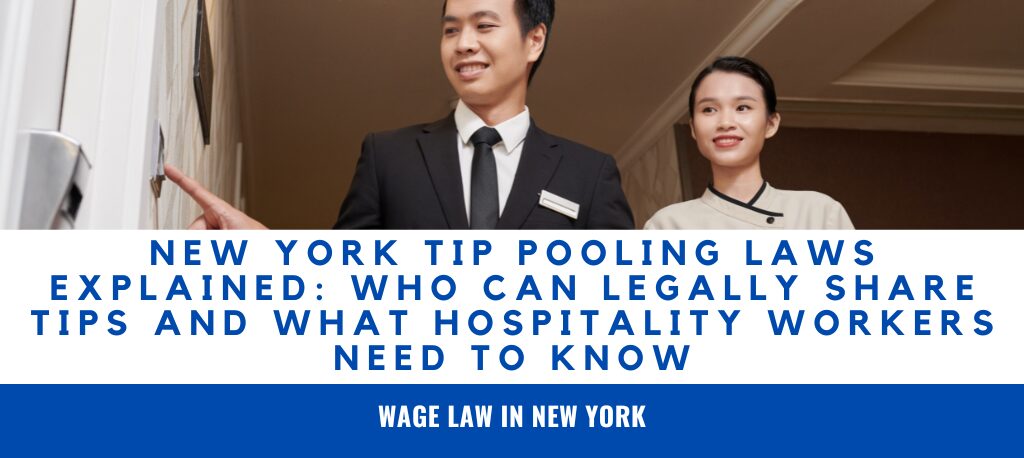
New York Tip Pooling Laws Explained: Who Can Legally Share Tips and What Hospitality Workers Need to Know

New York Tip Pooling Laws New York Tip Credit Rules Tip Pooling Laws for Restaurants New York Hospitality Employment Law Employee Tip Rights New York Restaurant Wage Laws New York New York Employment Lawyer Learn how New York tip pooling laws work, who can legally share tips, what a tip credit means, employee rights, employer responsibilities, and what to do if your tips are taken unfairly. Read this comprehensive guide from Sanders Law Group.

Introduction For thousands of hospitality workers across New York, tips are much more than a bonus. They are an important part of their income and help cover everyday expenses such as rent, groceries, transportation, and bills. Whether you work as a server in a busy restaurant, a bartender in a local pub, or a food runner in a luxury hotel, every dollar earned through tips matters. Many hospitality businesses use a tip pooling system to distribute tips among employees who contribute to the customer experience. While tip pooling is common, it is also one of the most misunderstood areas of...

Continue reading
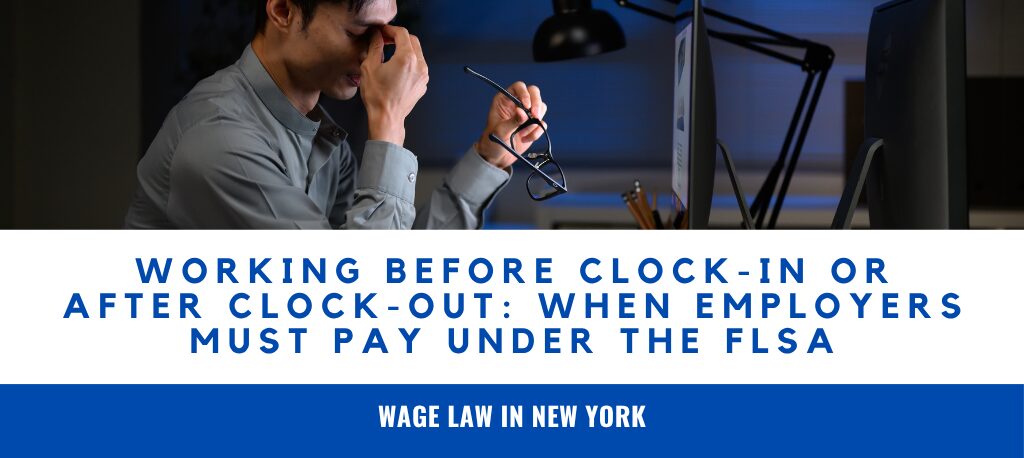
Working Before Clock-In or After Clock-Out: When Employers Must Pay Under the FLSA

working off the clock FLSA pre shift meeting pay laws unpaid work employee rights FLSA overtime rules explained off the clock work violations do employers have to pay for pre shift work unpaid wages legal help Learn when employers must pay for pre-shift and off-the-clock work under the FLSA. Understand your rights and recover unpaid wages with Sanders Law Group.

Introduction: The Hidden Hours Employees Aren’t Paid For In today’s fast-moving work culture, many employees unknowingly give away their time for free. It may not feel like a big deal in the moment, logging in five minutes early, staying back to finish a quick task, or replying to a message after dinner, but these small actions often go unnoticed and unpaid. Over days, weeks, and months, this “extra” time quietly builds into hours of unpaid labor. The reality is that modern work environments have blurred the boundaries between work time and personal time. With smartphones, remote access, and constant connectivity,...

Continue reading